Showing posts with label houses. Show all posts

Saturday, August 30, 2014

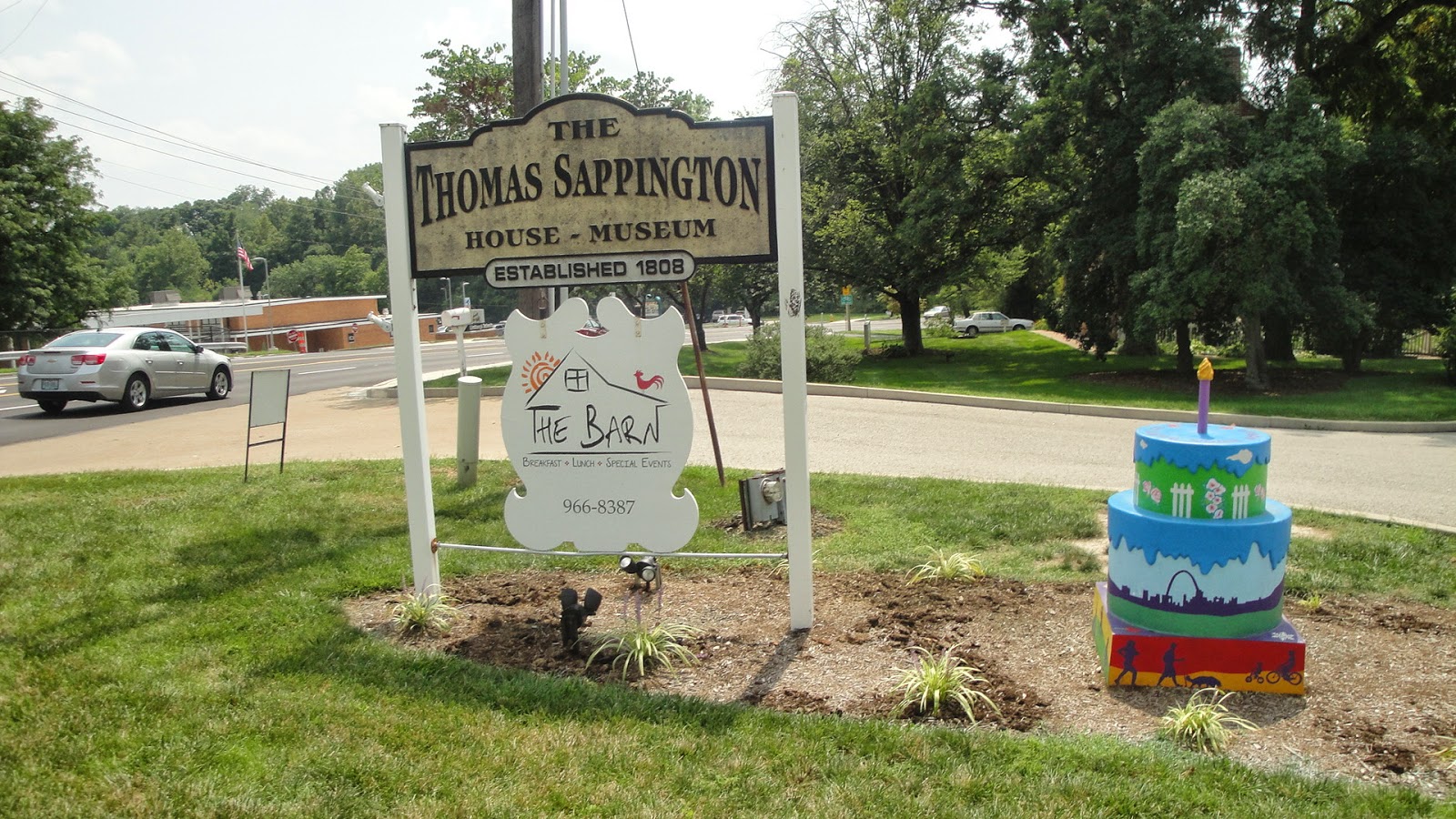
#246: Sappington House Museum

The Thomas Sappington House was one of my last few final stops to 250. I ended up parking here in the early afternoon so I can easily access the Grants Trail to Grants Farm. It was, like, 95 degrees hot outside! But after all the exploring, it was worth dodging the $12 parking fee at the farm. It was about a mile and a half using the trail from the Sappington House to Grants Farm. Unfortunately, I didn't go in the restaurant, gift shop or take the tour. I hope to come back sometime down the road.

Who is Thomas Sappington, you ask? Here are the factoids:
  • The Sappington Family were early settlers of St. Louis County, during the final days of Lewis & Clark's expedition.
  • Thomas was a Revolutionary War veteran who served as George Washington's bodyguard at Valley Forge
  • The house was built in 1808 after Thomas' marriage to Mary Ann Kinkhead.
  • The Sappington Barn was built in later years, and is a model of a barn that once existed on the property in the 19th century.
  • The house was restored and by 1966, it was open for tourists. Still is to this day, as a reminder of what life was like during the 19th century in Crestwood and St. Louis.

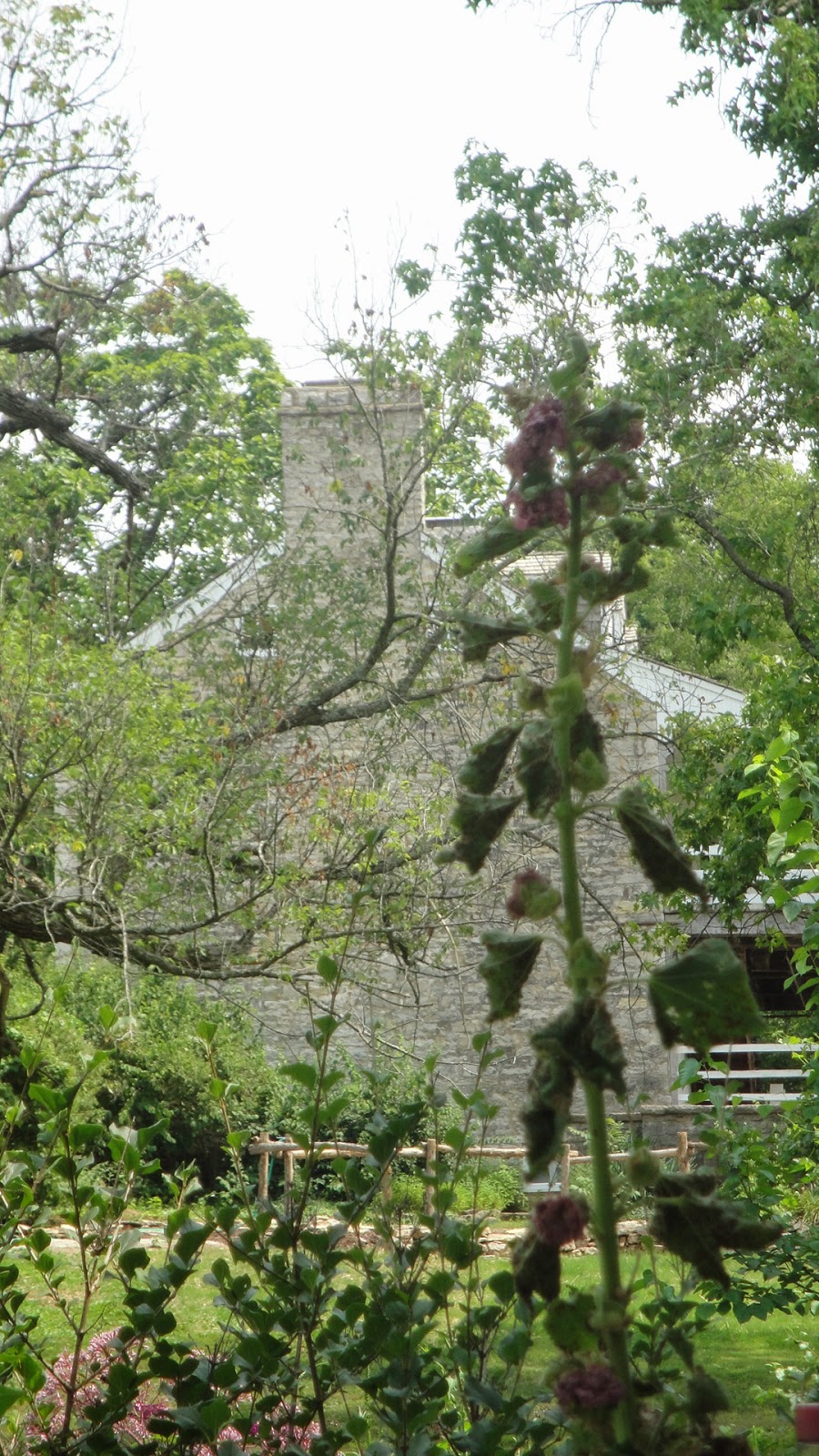
Front of the Sappington House (from the road)


The cake, designed by the students of the Ursuline Academy of St. Louis (an all-girls private high school that is located in nearby suburb Oakland and is, fittingly enough, on Sappington Road):
Back side of the cake

Right side of the cake

Left side of the cake

Top of the cake, which reads Ursuline Academy's initials and a message: 'Go light your world'
NOW: As of 6/4/2015, the cake is still sitting there.

Official website


1015 S. Sappington Road, CRESTWOOD, MO, 63126
Cake artists: Ursuline Academy Students

Monday, August 25, 2014

#217: Scott Joplin House

It was more than a thrill to come in here and check this place out for the very first time. Those who know me very well know that I am a popular-music enthusiast. And yes, Scott Joplin is considered popular music. In fact, some scholars cite him to be one of the first in 'modern popular music', before it even became a term! Even more thrilling is the fact that he lived in St. Louis, but for a brief amount of time. Nonetheless, this museum is the only place in the world devoted to the 'King of Ragtime Music'.

I think everyone who loves music and pop culture of any kind will enjoy this museum. It has everything historians will want you to know about Scott Joplin. Memorablia is on the walls and on display, as well as items and furniture (even though they weren't his) from the early 1900s are spread throughout the house. The house has been restored to its original condition, with help from several volunteers.

A little background on the house: Scott Joplin and his wife moved here from Sedalia in 1900 to Morgan Street (now named Delmar Boulevard). At that time, it was a neighborhood/city section where African-Americans lived, worked and commuted. It is said by the website and other publications that they lived here from 1903, although my tour guide told me they actually lived here for only a year. I believe even though this was their home, they might have dropped in every now and then during those four years. Unfortunately, history does not record when he and his spouse actually stayed at the house. This is just what historians believe.

Here are some facts about Joplin:
  • His birthdate is believed to be in 1868, even though it has not been ever verified. 
  • Born in Marshall, Texas, he moved to Sedalia to expand his craft and enroll at the George R. Smith College for Negros, where he studied music.
  • By the time he was a teenager, he was an expert in music, playing several instruments.
  • His most popular compositions were Maple Leaf Rag, The Entertainer and Bethena. 
  • Sadly, during the Joplins' stay in St. Louis, their baby girl (who was born there) died while an infant and Scott and his wife divorced him.
  • On another sad note, most of his possessions (if known), including his hand-written compositions did not survive as they were destroyed.
  • While he wasn't in St. Louis in 1904, he did write a song based on the World's Fair after seeing a fountain he considered beautiful, titled Cascades. 
  • He spent many of his post-St. Louis years on the road, and eventually moved to New York City in 1907, hoping to expand his success. 
  • Joplin died in 1917 at a mental institution in Manhattan, after suffering from syphilis and dementia for a year.
As you can see, there's several things I can say about Joplin; too many to list! But I hope this is a clear overview of his short-lived life. Ragtime music was a popular form of music in the early 1900s, which spun off into several different subgenres. It would be overshadowed by a more contemporary type of music, including slower, romantic waltzes and famous dances including the charleston by the 1920s. Ragtime music is widely considered an ancestral type of music for rock and roll.

In 1974, Scott Joplin's work would be recognized again thanks to the late Marvin Hamlisch. Hamlisch recorded many of Joplin's songs and featured them to the soundtrack to the Oscar-winning movie, The Sting. Hamlisch's version of 'The Entertainer' went to No. 3 on the Billboard Pop chart, as well as hitting No. 1 on the Adult Contemporary chart.


Wikipedia link
Official website

2658 Delmar, ST. LOUIS, MO, 63103
Cake artist: Bruce Howard   (he also decorated the Kenrick-Glennon cake)

Saturday, August 16, 2014

#204: Historic Daniel Boone Home & Heritage Center

*PUBLIC VOTE WINNER*

The last time I was here, I was either 3 or 4 years old, when my dad took my family on a day-long road trip here and some other historical place (can't remember?!). I didn't have any memories of it, but nonetheless it was a thrill to come back here. I didn't, however, go in the house. I was on a time schedule at the time, but I did walk around a bit and bought stuff from the gift shop. There were men outside in front of the gift shop constructed a new pavilion. I'm not sure when it will open.


The gift shop, which provides access to the walkway to the real house
The four-story Georgian style home was built to overlook the Femme Osage valley. It was built by Daniel's son, Nathan. The house now sits as part of Boonefield Village.

The village of Defiance is an unincorporated community.

A glimpse of the actual home from behind the gift shop


About Daniel Boone:

  • Born in Reading, PA in 1734. 
  • Later settled in North Carolina and hunted for a living. 
  • Migrated westward to present-day Kentucky, where he helped organize the future state starting in 1767.
  • He finally moved his family to Missouri, or at the time, called Upper Louisiana, in 1799.
  • Died in the home on September 26, 1820.
Left side of the cake


Right side of the cake


Daniel Boone Home on FB (as Lindenwood University Daniel Boone Home)
Wikipedia link

1868 Highway F, DEFIANCE, MO, 63341
Cake artist: John Troy  (he also decorated the Lindenwood University cake)

Friday, July 4, 2014

#153: Emma Kunz House

Hey wait....Emma who? Here is the other of two historic houses in downtown Belleville. I've questioned a lot about this place. Like I've always said during this cakehunt: 'I didn't know this place ever existed!'. In this case, I'm wondering who Emma Kunz was. I'll get to that later. And what is so significant about her house? Do people come from all over the country to visit this place? Maybe, maybe not. I will say this: the house has been refurbished many times and today, visitors get to experience 19th century lifestyles and what was considered technology back then. The way we look at it today is similar to Amish people.

Warning: When searching for these cakes, you will need a great GPS or if you're old-school like me, a zoomed-in print-out version of the cake map. If you don't often go to Belleville, you're probably unfamiliar with the one-way streets and constant four-way stops in the downtown part.

The factoids:
  • House was built in 1851 by Conrad Borman, a local brick contractor. (Note: some other sources say 1830)
  • It is noted to be the earliest dated Greek Revival house in Belleville and possibly in Illinois.
  • The house was originally located on Washington Street in Belleville but in 1972 it was moved to its current location. It did not have a front yard, which was typical European-style at that time.
  • Because of its historical significance, it was saved from demolition by the St. Clair Historical Society.
  • Emma Kunz' family lived in it for 80 years. Emma lived there for 77 years and was the last resident.
  • Tours are usually done by appointment.


602 Fulton St., BELLEVILLE, IL, 62220
Cake artist: David Ottinger

Official website (from the St. Clair Historical Society)

UPDATE (8/24/2016): The cake is still there.

Friday, June 27, 2014

#105: Payne Gentry House

  • Missouri's only historic-registered 19th century house that has a doctor's office inside.
  • Built in 1870, William Payne started his doctor's office in 1880.
  • Located next to the Bridgeton Municipal Athletic Complex.
  • The house still contains items that were in the possession of the family that lived there (Mary Elizabeth and her daughter).
  • It is noted by paranormal groups that it is one of the most haunted places in North County.
The sign

I didn't know what this was about, but I assumed this was for house visitors and/or cake-hunters. I signed it anyway!

Front part of the house (and cake)


As the only cake located in Bridgeton (to date), here are some facts about Bridgeton:
  • Bridgeton was founded in 1794. 
  • In 1950, Bridgeton's population was 250. Today in 2014, that number is now over 11,000. 
  • Parts of the Lambert St. Louis Airport are in the city limits.
  • Fee Fee Cemetary, founded in 1814, has markings of soldiers from every war (includes Revolutionary)
  • Other historical buildings in Bridgeton include the Fee Fee Baptist Church (1807) and the Mizpah Presbyterian (1842).
Here's some more shots of the cake, as beautifully done by Genevieve Esson:
Top of the cake

Back side of the cake

Payne-Gentry House on Bridgeton, MO's city website
National Historic Places nomination form (PDF file)

4211 Fee Fee Road, BRIDGETON, MO, 63044
Cake artist: Genevieve Esson

Thursday, June 26, 2014

#76: Frank Lloyd Wright House

Of all the cakes put out, this one, in my mind, takes the cake (pun intended) for being the one put in the strangest place. I'm not talking about the actual location, but this cake (when I visited it) was just randomly on the side of the road. If you ever drive on Ballas Road, you'll know what I'm talking about. The actual house is on a small road that spins off of Ballas. Once you see the sign, you know you're there.

The stl250 website lists the location as 'the Frank Lloyd Wright House', but what they leave out is: 1) it is part of Ebsworth Park, and 2) it is also named 'the Kraus House'. The house was originally built for Mr. and Mrs. Russell Glaus in the 1950s. The house was never completed, even though the couple lived in it for 40 years. Russell sold the house in 2001, to a non-profit group to help preserve the house. Today it is open for tours. 

And about Frank Lloyd Wright (1867-1959): He was a famous architect. Actually, famous is an understatement. He was 'world-renowned', putting him up there with Stafford White. (In the early 20th century, architects and designers were 'celebrities' in that time before movie and music stars) His works include Fallingwater and Taliesin. In 2001, Wright was recognized as 'the greatest architect of all-time' by the American Institute of Architects.


NOTE: This cake was reportedly stolen in early November 2014, while there was construction at Ballas Road. It was placed back the next day, partly damaged. It is not known who took the cake.

Wikipedia link
Ebsworth Park Official website

120 N. Ballas Road, ST. LOUIS, MO, 63122  (it is actually located close to Kirkwood)
Cake artist: Chris Rice

Monday, June 23, 2014

#4: Historic Hanley House

  • Listed on the National Register of Historic Places
  • Built by Martin Franklin Hanley in 1855
  • The oldest building in Clayton.
  • Presently surrounded by modern homes.


Website

7600 Westmoreland Avenue, Clayton, MO, 63105
Cake artist: Andy Cross

UPDATE (9/4/2016): The cake was sold at an auction from the Clayton Century Foundation, where the proceeds went to enhancing the city of Clayton. The auction ran throughout the month of February 2015, in which both the Shaw Park and Hanley House cakes were being bid on. It ended on February 27, and now both cakes are on private property.